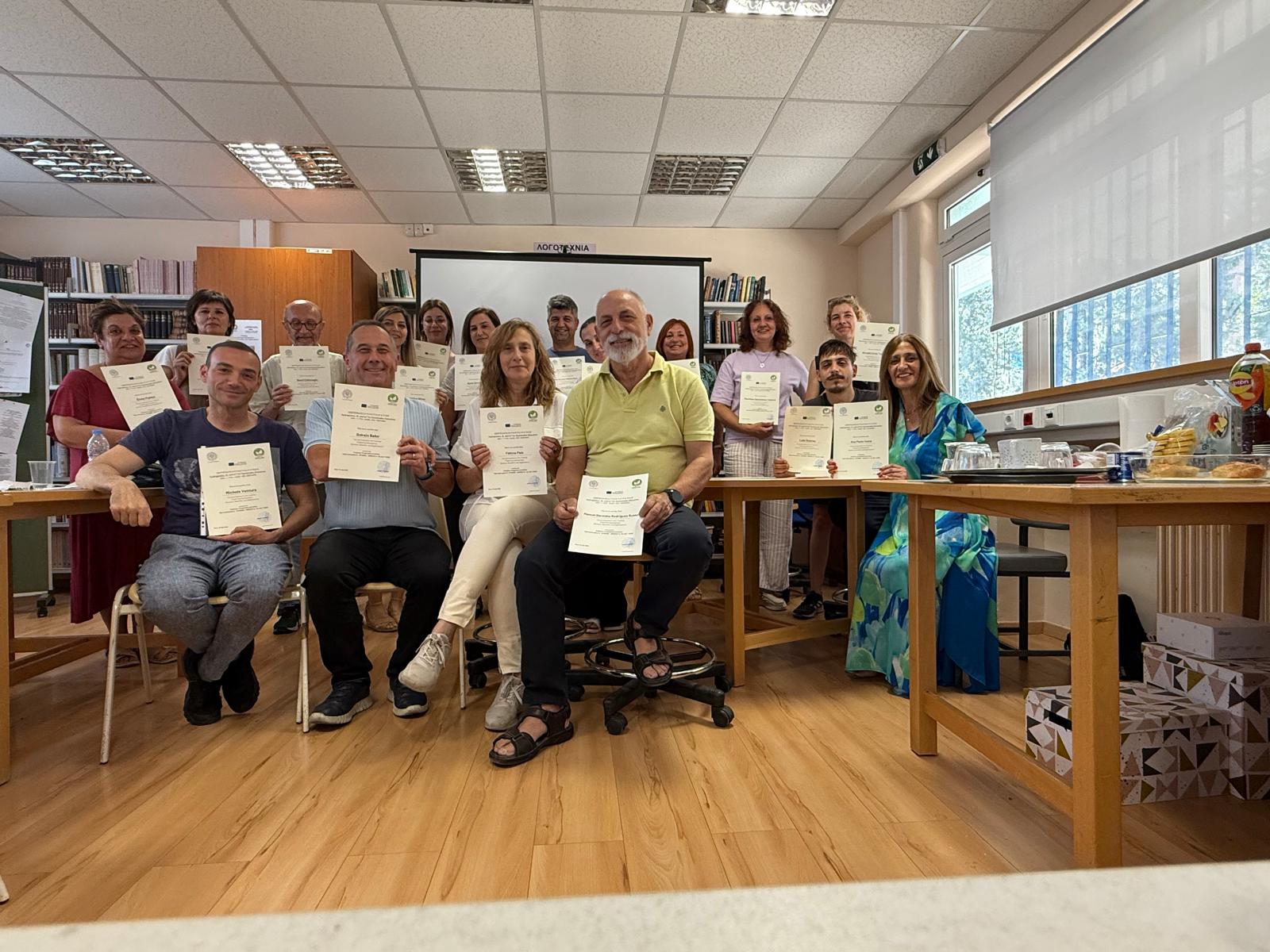
From July 14–18, 2025, project partners from across Europe gathered in Athens for the official training session of the Erasmus+ project HAI – Hydroponics, AI, and IoT for Sustainable Education. Hosted jointly by the Agricultural University of Athens and the 1st Gymnasium of Papagou, the training programme titled “Exploring Hydroponics: Systems, Benefits, and Applications” brought the project’s key themes to life through lectures, hands-on sessions, and collaborative learning.
The training kicked off with a full day at the Agricultural University of Athens, where participants joined the annual summer school and engaged with leading researchers in the field of soilless agriculture. Professor Dimitrios Savvas introduced core terminology and nutrient management strategies, while Professor Nikos Katsoulas led sessions on greenhouse microclimates, technical equipment, and the role of aquaponics. The sessions laid a strong scientific foundation and set the tone for the rest of the week.
On Tuesday, the focus shifted to practical applications. Hosted at the 1st Gymnasium of Papagou, the training led by Bahçeşehir University Foundation (Türkiye) offered a deep dive into the fundamentals of hydroponic systems and the integration of IoT in plant monitoring. Participants had the opportunity to explore different hydroponic models, understand system design, and consider real-world challenges such as water efficiency and system automation.
Wednesday’s session, led by Sucessos Criativos (Portugal), moved into the digital dimension of the project. The training explored how AI can be embedded into hydroponic systems using sensors, cloud platforms, and smart data collection. Participants also discussed how hydroponics can be linked to STEAM subjects and school curricula, strengthening its relevance for modern teaching. One of the highlights was the official presentation of the HAI platform, a digital tool developed to support schools in managing hydroponic projects, tracking data, and fostering collaboration across Europe.
Thursday marked a return to the university for a more advanced exploration of nutrient strategies. Dr. Rodney Thompson opened the day with a regional perspective on Mediterranean cropping systems, followed by practical guidance from Tommaso Barbagli on nutrient calculations and data interpretation. These sessions reinforced the need to connect scientific knowledge with teaching strategies that students can actively engage in.
The final day offered a cultural close to an intense and rewarding week. Partners visited the iconic Acropolis of Athens, reflecting on the project's deeper connection to European heritage, cooperation, and shared innovation. This symbolic moment underscored the project’s commitment to bridging education, technology, and sustainability across borders.